Brooklyn is one of the most architecturally complex boroughs in New York City. From the landmarked brownstones of Park Slope to the industrial conversions of Bushwick and the high-rise developments rising along the waterfront in Williamsburg, every block presents a different construction challenge. And at the center of almost every exterior construction, renovation, or maintenance project stands one critical decision: which commercial scaffolding system is right for this job?
That question is more consequential than most project managers realize. The wrong scaffolding choice slows timelines, triggers safety violations, and creates permit headaches with the NYC Department of Buildings. The right choice — matched precisely to the building type, work scope, and site conditions — keeps crews safe, projects on schedule, and inspectors satisfied.
Why Brooklyn’s Built Environment Demands Specialized Scaffolding
Brooklyn’s architecture does not conform to a single template, and neither do its scaffolding requirements. A historic restoration project in Cobble Hill operates under different constraints than a ground-up commercial development in Downtown Brooklyn or a facade inspection triggered by Local Law 11 compliance on a mid-rise in Bay Ridge.
Each of these scenarios involves different load requirements, access geometries, ground-level pedestrian considerations, and permit pathways. A scaffolding provider without direct experience in Brooklyn’s regulatory environment and building stock will struggle to navigate these differences efficiently.
Brooklyn-specific considerations that affect scaffolding planning include narrow sidewalk corridors in residential neighborhoods, landmark preservation rules that restrict certain anchor methods on historic facades, active retail frontages that require pedestrian shed integration, and borough-specific DOB inspection timelines that can affect project scheduling.
The Four Scaffolding Systems Used in Brooklyn Commercial Projects
Selecting the appropriate scaffold system is the first technical decision on any project. Each system serves a distinct structural and operational purpose.
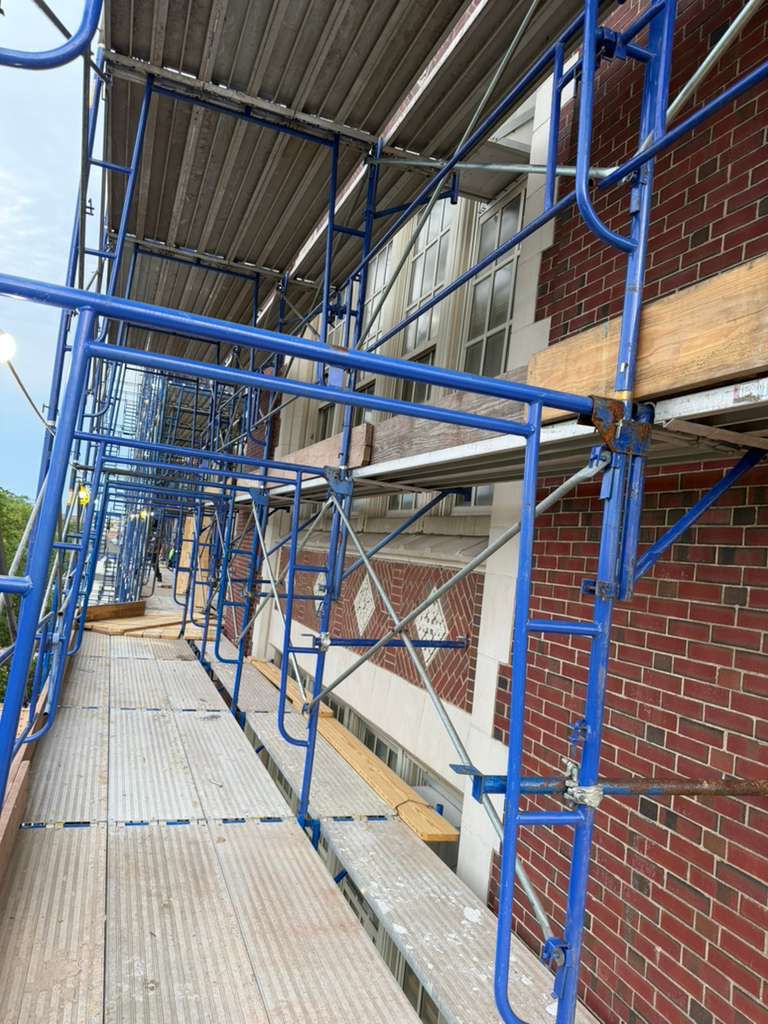
Frame Scaffolding is the most commonly deployed system across Brooklyn commercial sites. It assembles quickly from standard modular components, supports significant vertical height, and suits a broad range of tasks — facade painting, masonry pointing, window replacement, and general access work on low-to-mid-rise structures. Its rapid setup and teardown make it cost-efficient for projects with defined short-to-medium timelines.
Suspended Scaffolding hangs from overhead anchors attached to the roof structure and is the system of choice for high-rise exterior work. It allows workers to access any elevation of a tall building’s facade without a ground-supported structure. In Brooklyn’s growing waterfront district, where new residential towers exceed 30 stories, suspended systems are frequently specified for cladding installation and curtain wall maintenance.
Rolling Scaffolding provides horizontal mobility on wheels, making it ideal for interior commercial spaces — warehouses, large retail floors, and industrial buildings undergoing fit-out. It is also used for exterior work along long, uniform facades where the crew needs to advance systematically without repeatedly dismantling and rebuilding the platform.
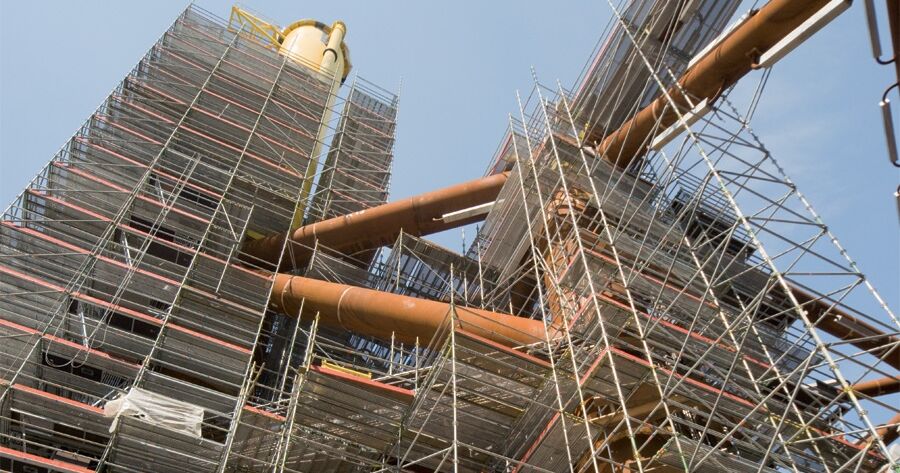
System Scaffolding (modular scaffolding) is the most adaptable option for complex structures. Its interlocking components allow engineers to configure platforms around curved facades, irregular floor plates, and non-standard building geometries — common in Brooklyn’s converted factory buildings and mixed-use developments. It is load-rated for heavy materials and supports long-duration access requirements.
OSHA Compliance and NYC DOB Regulations in Brooklyn
Every commercial scaffolding installation in Brooklyn must comply with two overlapping regulatory frameworks. Federally, OSHA 29 CFR Part 1926 Subpart Q establishes the minimum requirements for scaffold construction, load capacity, fall protection, and access. These rules apply to every job site regardless of building size or project type.
At the city level, the NYC Department of Buildings enforces Local Law requirements and requires permit filings before scaffolding can be erected on public thoroughfares. For buildings subject to Local Law 11 — the facade inspection law that applies to structures taller than six stories — scaffolding is often mandated as part of the inspection access plan, and the permit process must be coordinated in advance to avoid project delays.
Brooklyn contractors who skip or delay the permit coordination step frequently face stop-work orders that cost far more in lost time than the original permit fees. Working with a scaffolding company that handles permit filing as a standard part of its service eliminates this risk entirely.
What to Look for in a Commercial Scaffolding Company in Brooklyn
Not every scaffolding provider operating in Brooklyn has the depth of experience that commercial projects demand. Before committing to a contractor, evaluate them against these criteria:
Proven Brooklyn project history. Brooklyn’s neighborhoods each carry distinct site challenges. Ask for references from comparable projects — not just general NYC work.
In-house permit coordination. DOB permit filing should be handled by the scaffolding company, not delegated to the general contractor as an afterthought. Delays in permit approval directly delay installation.
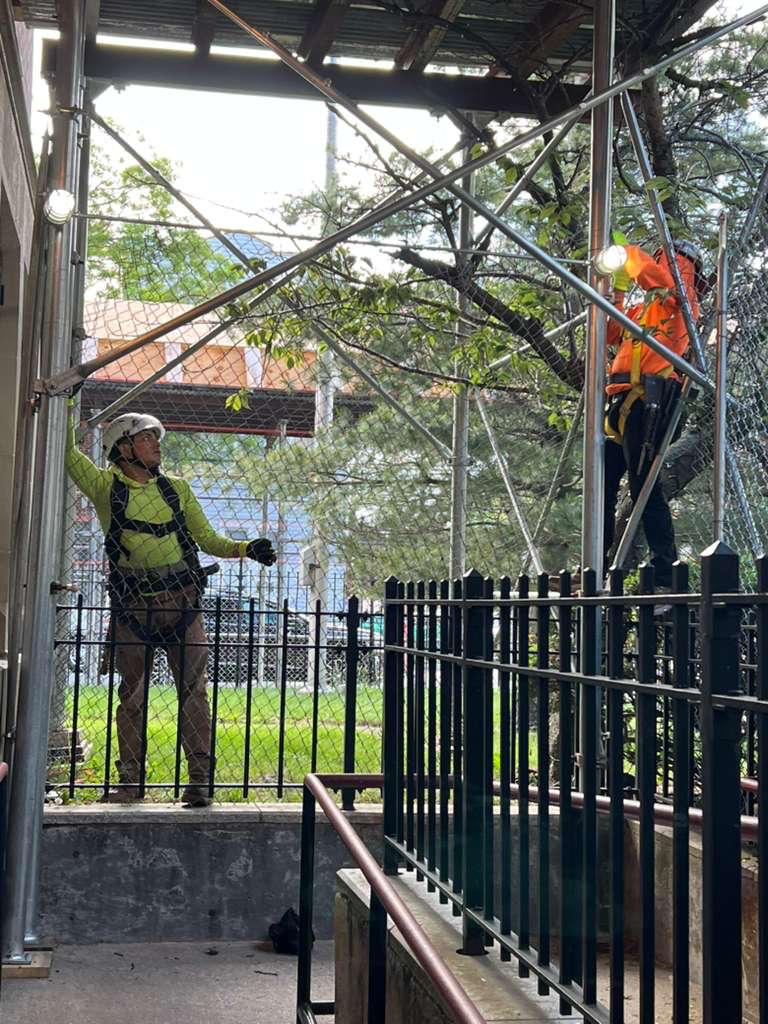
OSHA-certified crews. All personnel involved in scaffold erection, inspection, and dismantling should hold current OSHA-10 or OSHA-30 certification. Ask to see documentation before signing a contract.
Equipment inspection protocols. Every scaffold component should pass a rigorous inspection before it arrives on your site. Ask about the company’s inspection and maintenance cycle.
Responsive project management. Commercial construction timelines shift constantly. Your scaffolding partner needs to respond quickly to scheduling changes, scope adjustments, and emergency access needs.
Planning Your Brooklyn Commercial Scaffolding Project
Before requesting a quote, clarify the following parameters to get an accurate proposal:
- Total building height and facade area requiring access
- Type of work being performed (masonry, painting, inspection, cladding, window replacement)
- Expected project duration
- Pedestrian protection requirements — does the site need a sidewalk shed or overhead netting?
- Any landmark designation or preservation restrictions on the building
- Load requirements for materials being moved on the platform
Providing this information upfront allows the scaffolding contractor to design the correct system, size the crew appropriately, and begin the permit process without back-and-forth delays.
The Bottom Line on Commercial Scaffolding in Brooklyn
Brooklyn’s construction market rewards preparation. The borough’s regulatory complexity, architectural diversity, and active street life create genuine site challenges that only experienced commercial scaffolding providers know how to manage. Choosing a company based on price alone — without vetting their permit history, safety record, and Brooklyn-specific project experience — is a risk that shows up in delays, violations, and cost overruns.
Scaffolding Shed brings deep Brooklyn expertise, OSHA-compliant equipment, and full-service permit coordination to every commercial project. Whether your job involves a historic brownstone facade, a high-rise curtain wall, or a large-scale commercial development, the right scaffolding system is the foundation everything else is built on.
Get a free consultation: scaffoldingshed.com/commercial-scaffolding-brooklyn | (212) 621-9700