Every building undergoing facade work, roofing repair, or new construction in New York City eventually runs into the same requirement: a sidewalk shed. For property owners and contractors unfamiliar with the process, the term can sound like a minor formality. In practice, it is a legally mandated pedestrian protection structure governed by strict New York City Department of Buildings (DOB) codes, and getting it wrong can delay a project by weeks.
This guide breaks down what a sidewalk shed actually is, why the DOB requires one, how installation works from permit to removal, what it costs, and how it differs from pipe scaffolding — so property managers, developers, and general contractors can plan with confidence.
What Is a Sidewalk Shed and Why Does NYC Require One?
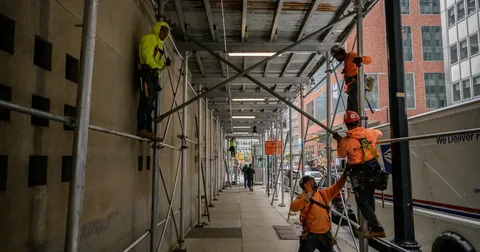
A sidewalk shed is a temporary overhead protective structure built along the perimeter of a building, typically constructed from steel posts, cross beams, and a plywood or steel roof deck. Its purpose is singular: to protect pedestrians, vehicles, and adjacent property from falling debris, tools, or materials during construction, restoration, or facade maintenance work above street level.
Under New York City’s Administrative Code and the DOB’s Local Law 11 (also known as the Facade Inspection Safety Program, or FISP), buildings taller than six stories are required to install sidewalk sheds whenever exterior work is performed at height, or when a facade inspection identifies unsafe conditions. The requirement isn’t optional or building-specific — it applies uniformly across Manhattan, Brooklyn, Queens, the Bronx, and Staten Island, with additional coverage extending into Long Island and parts of New Jersey.
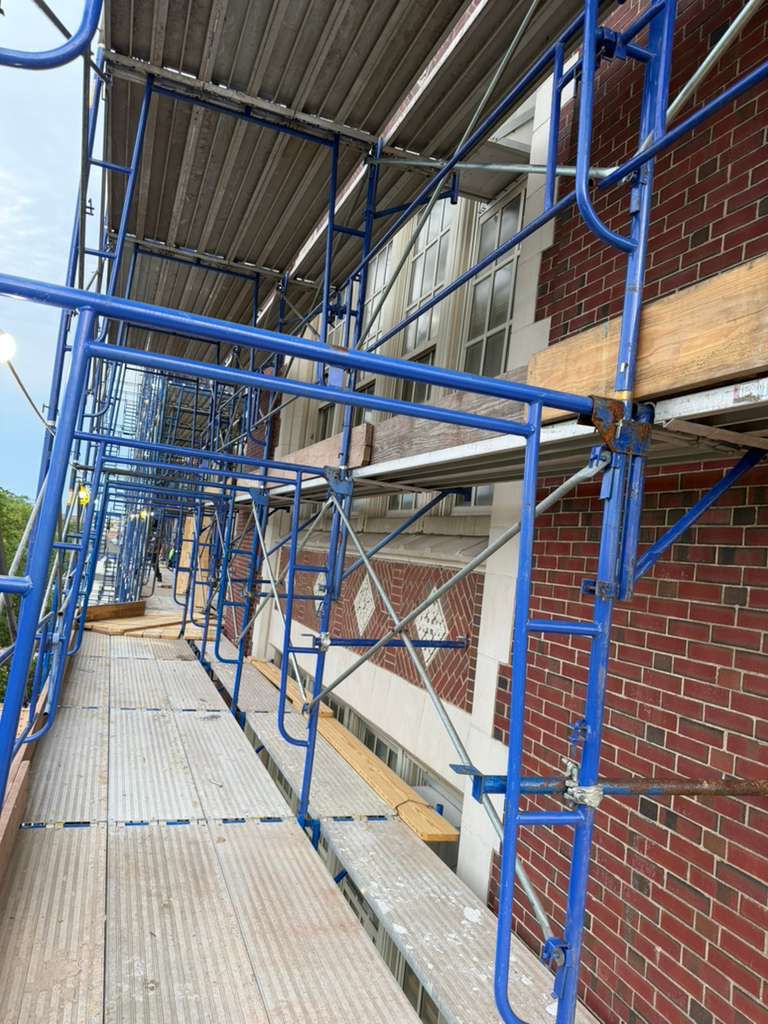
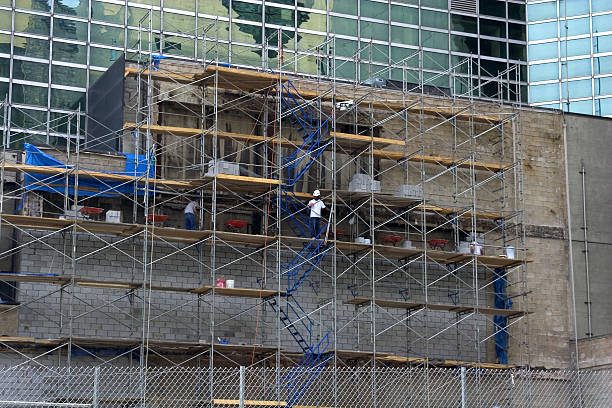
A sidewalk shed differs functionally from pipe scaffolding, though the two are often installed together. Scaffolding provides workers with elevated access to perform the actual work — masonry repair, waterproofing, window replacement — while the sidewalk shed sits below it, forming a protective canopy over the public right-of-way. If you’re planning a facade project, it’s worth understanding both systems side by side; our overview of pipe scaffolding installation services explains how the two structures typically work in tandem on a single job site.
The DOB Permitting Process
No sidewalk shed can legally go up in New York City without an approved DOB permit. This is where many property owners run into friction, since the permitting process involves multiple layers of documentation:
- Application filing — A licensed contractor or engineer files the permit application with the DOB, including site plans, structural specifications, and proof of insurance.
- Plan examination — DOB examiners review the proposed shed design against structural load requirements and pedestrian flow standards.
- Permit issuance — Once approved, the DOB issues an active permit number, which must be posted visibly on the structure once installed.
- Inspection scheduling — Depending on the scope of work, periodic inspections may be required throughout the permit’s duration.
Permits are not indefinite. They require renewal, and the DOB actively tracks which structures are operating under expired or inactive permits — a common source of violations for building owners who assume a shed can simply stay up indefinitely. Before starting a project, it’s worth reviewing our page on active sidewalk shed permits to understand how permit status is tracked and what renewal timelines typically look like.
How Long Does Sidewalk Shed Installation Take?
Installation timelines depend on three variables: permit approval speed, the length of sidewalk frontage being covered, and site accessibility. A straightforward residential building frontage might be installed within a day or two once the permit is active. Larger commercial frontages spanning an entire block, or sites with underground utility conflicts, can take considerably longer.
The permitting stage is usually the longer bottleneck, not the physical construction. DOB review times fluctuate based on filing volume and whether the application is complete on first submission. This is one of the main reasons experienced sidewalk shed companies emphasize accurate, complete filings — an incomplete application can add weeks to a project timeline before a single steel post is placed.
Sidewalk Shed Rental Costs and Lease Structure
Sidewalk sheds are typically leased rather than purchased outright, since most projects only require the structure for the duration of active construction or restoration work. A standard rental arrangement includes an initial lease period — commonly around 90 days — followed by a recurring monthly rate for as long as the shed remains in place.
Pricing varies by frontage length, structural complexity, and whether integrated lighting is required (lighting is mandated under DOB code for pedestrian safety at night). For a detailed breakdown of current lease terms and monthly rates, see our scaffolding and sidewalk shed rental page, which outlines exactly what’s included in a standard installation package, from permit coordination to electric lighting.
It’s worth noting that rental costs are only one part of the budget. Property owners should also plan for ongoing maintenance obligations, since DOB code places responsibility on the building owner to maintain daily inspection logs and keep the structure’s lighting and signage in working order throughout the rental period.
What’s Included in a Professional Installation
Not all sidewalk shed providers offer the same scope of service, and this is where project delays most often originate. A complete, professional installation should include:
- DOB permit coordination and filing for qualifying projects
- Structural engineering sign-off where required
- Code-compliant construction using rated steel components
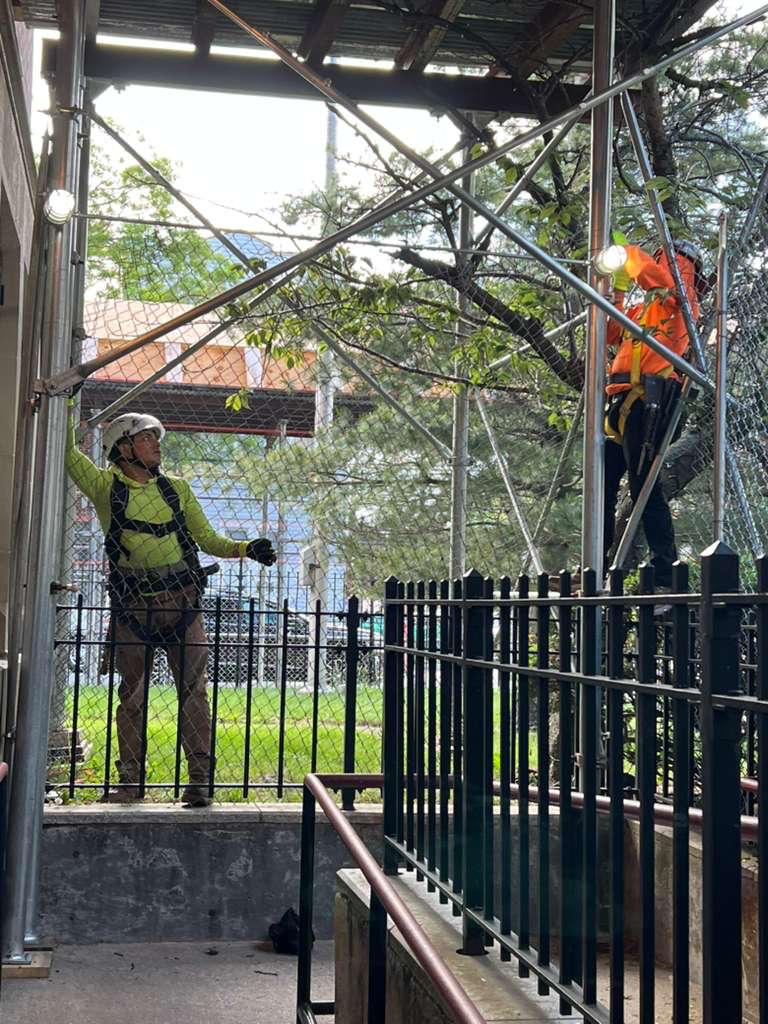
- Integrated electric lighting along the shed’s underside
- Signage indicating permit number and contractor information
- Coordination with pipe scaffolding crews if both structures are needed
- Scheduled dismantling and removal once work concludes
Working with a contractor who handles permitting in-house, rather than leaving it to the property owner, significantly reduces the administrative burden and the risk of code violations. Our scaffolding contractor services page details how this end-to-end coordination typically works, from the initial site evaluation through final removal.
Sidewalk Shed vs. Pipe Scaffolding: Choosing the Right Structure
Because the two terms are frequently used interchangeably by non-specialists, it’s worth clarifying the distinction directly:
Sidewalk sheds are horizontal, ground-level protective canopies. They don’t provide worker access — their sole function is pedestrian and property protection beneath a work zone.
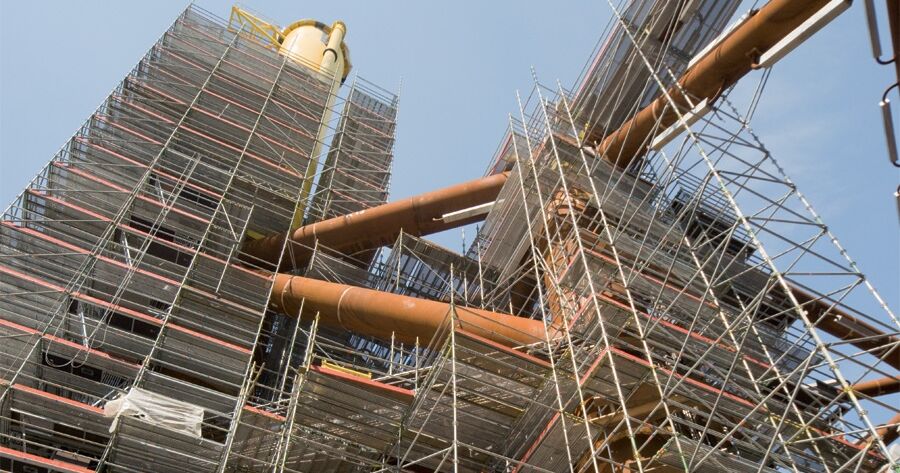
Pipe scaffolding is a vertical access system, built in tiers, that allows workers to physically reach upper floors, facades, and rooftops to perform the work itself.
Most facade restoration, masonry, and roofing projects in NYC require both structures simultaneously: scaffolding for worker access, and a sidewalk shed underneath to catch any falling debris. Commercial buildings undergoing large-scale restoration typically need a more robust, engineered combination of both systems, which is why it’s important to work with a provider experienced in commercial-scale installations rather than a general contractor handling scaffolding as a side service.
Compliance Risks of Skipping or Delaying Installation
The DOB actively enforces sidewalk shed requirements, and the consequences of noncompliance extend beyond fines. Buildings found performing exterior work without an active, properly posted permit can face stop-work orders, which halt the entire project — not just the facade component — until the violation is resolved. For developers working against tight construction timelines, a stop-work order is often far more costly than the shed rental itself.
Beyond regulatory risk, there’s a genuine safety dimension. Sidewalk sheds exist because falling debris from height poses real danger to pedestrians in one of the most densely walked cities in the country. Property owners who treat the requirement as a bureaucratic checkbox rather than a safety system are exposed to liability well beyond DOB fines if an incident occurs.
Frequently Asked Questions
Does every building need a sidewalk shed for exterior work?
Not every project requires one, but buildings over six stories performing facade work, or any structure with an active FISP violation, almost always do. Site-specific requirements should be confirmed with a licensed contractor before work begins.
Who is responsible for maintaining the shed once it’s installed?
The building owner is generally responsible for daily inspection logs and ongoing maintenance, including lighting, for the duration of the installation — even though a contractor handles construction and removal.
Can a sidewalk shed rental be extended?
Yes. Rental periods typically extend on a rolling monthly basis beyond the initial lease term, with fees applying according to the signed agreement.
How much notice is needed for removal?
Most providers require a minimum of two weeks’ notice to schedule dismantling once the underlying work is complete.
Planning a Sidewalk Shed or Scaffolding Installation?
Navigating DOB permitting, structural requirements, and rental terms is easier with a team that handles the entire process in-house. If your project in Manhattan, Brooklyn, Queens, the Bronx, Staten Island, Long Island, or New Jersey requires a sidewalk shed, pipe scaffolding, or both, get a free consultation and quote from Scaffolding Shed today. Our team manages everything from permit filing to final removal, so your project stays compliant and on schedule.