If you own, manage, or are building on a property in New York City, you will almost certainly encounter pipe scaffolding at some point — whether it’s wrapped around your own facade during a restoration project or standing outside a neighboring building on your block. Pipe scaffolding is one of the most common and dependable access systems used across the five boroughs, and understanding how it works, when it’s required, and what it costs can save property owners real time, money, and frustration.
This guide walks through pipe scaffolding from a practical, real-world angle: what it is, why it’s used so widely in NYC, how the permitting and rental process actually works, and what separates a dependable installer from one that will cost you delays down the line.
What Pipe Scaffolding Actually Is
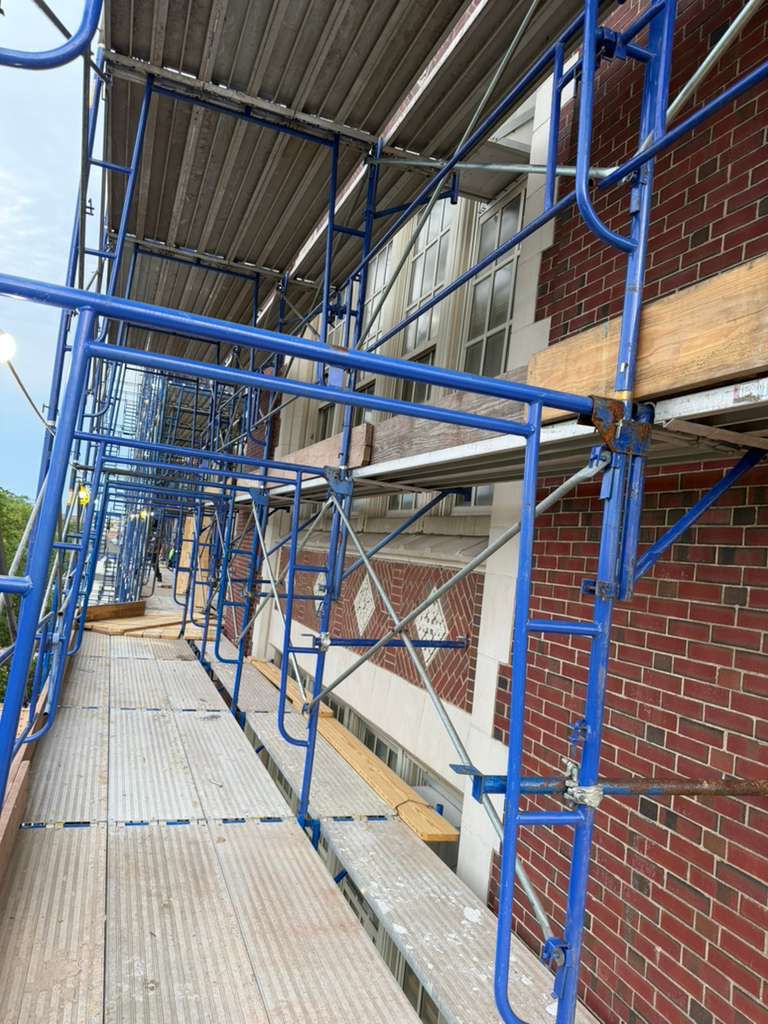
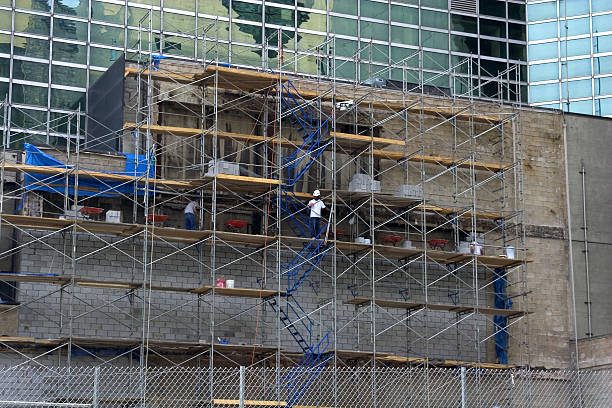
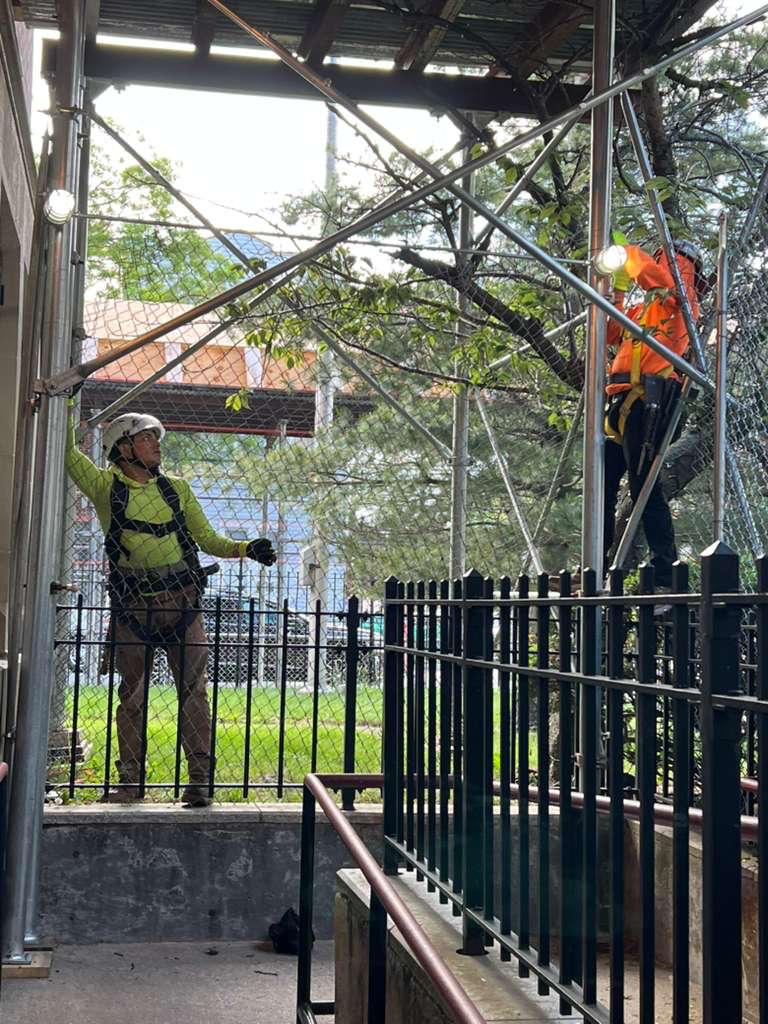
Pipe scaffolding — also called tube-and-clamp scaffolding — is built from individual steel pipes joined together with couplers and clamps rather than snapped into pre-built frames. That distinction matters more than it sounds. Because every connection is assembled on site rather than pre-manufactured into a fixed shape, pipe scaffolding can be built to match almost any building footprint, height, or access requirement. In a city where buildings sit shoulder to shoulder, facades curve and step back, and sidewalks leave little room to work, that flexibility is often the deciding factor in why pipe scaffolding gets specified over other systems.
A typical pipe scaffolding structure includes:
- Standards — vertical pipes that carry the load down to the base
- Ledgers — horizontal pipes tying the standards together at each working level
- Transoms — cross supports that hold the platform boards
- Couplers — fittings that lock pipes together at right angles or swivel angles
- Base plates — components that spread the load evenly at ground level, especially important on uneven sidewalks
- Wall ties — connections back into the building that keep the structure stable against wind
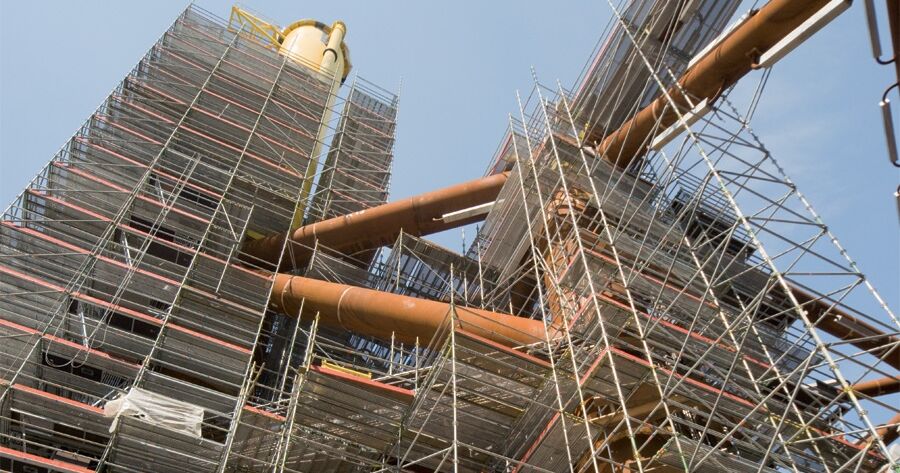
Because it’s built piece by piece, pipe scaffolding can reach heights and take shapes that pre-fabricated frame systems simply can’t match — which is exactly why it remains the backbone of exterior work across Manhattan, Brooklyn, Queens, the Bronx, and beyond.
Why NYC Relies So Heavily on Pipe Scaffolding
New York’s building stock is old, dense, and architecturally inconsistent — a combination that makes pipe scaffolding the practical default rather than just one option among many.
Facades that don’t follow a straight line. Cornices, fire escapes, bay windows, and ornamental brickwork are the norm on pre-war buildings throughout the city. Pipe scaffolding can be shaped around these features piece by piece, something a rigid frame system can’t do without gaps or awkward workarounds.
Heavy loads for restoration work. Facade repair, masonry repointing, and Local Law 11 (FISP) inspection work all require workers to carry tools, mortar, and materials up and down the structure repeatedly. Properly engineered pipe scaffolding can be rated to carry substantially more weight than lightweight alternatives.
Height that adjusts to the project. High-rise facade work often requires scaffolding to reach well past what a standard modular system supports. With calculated tie-back spacing and bracing, pipe scaffolding extends safely to heights that would be structurally unsound otherwise.
Direct integration with sidewalk sheds. Almost every NYC pedestrian has walked under a sidewalk shed — the covered walkway required by the Department of Buildings to protect the public during exterior work. Pipe scaffolding connects naturally into shed construction, since the same components used above street level extend down to form the protective canopy pedestrians pass beneath.
Where Pipe Scaffolding Shows Up Most Often
Pipe scaffolding is put to work across a wide range of NYC project types, including:
- Facade restoration and Local Law 11 compliance, where buildings over six stories must undergo periodic inspection and repair
- Masonry and brick repointing, which requires a platform that can be adjusted incrementally as crews move up a wall
- Roofing and waterproofing, where continuous horizontal access along a facade speeds up the work
- Window replacement and cornice repair, often at access points that don’t line up with a building’s floor levels
- New construction and partial demolition, where scaffolding needs may shift as the structure itself changes shape
The Permitting and Compliance Side of Pipe Scaffolding
This is where a lot of property owners get caught off guard. Pipe scaffolding in NYC isn’t just a structural matter — it’s a regulatory one, and skipping a step can mean fines, stop-work orders, or a stalled project.
DOB permits. Most scaffolding installations, and virtually all sidewalk sheds, require a permit from the NYC Department of Buildings before work begins. Depending on the scope, this can involve filed plans and sign-off from a licensed engineer or registered architect.
Local Law 196 training. Anyone erecting, dismantling, or supervising scaffolding in the city must complete Site Safety Training. Supervisors typically need a 62-hour SST card, while general crew members need at least 40 hours, often supplemented with site-specific training.
Engineering review for taller or heavier structures. Scaffolding above certain heights, or carrying above-standard loads, generally requires a site-specific engineering plan covering tie-back spacing, base loading, and wind resistance before installation.
Ongoing inspection. Once installed, scaffolding needs regular inspection — both by the installing company and, in many cases, DOB inspectors. Loose couplers, missing guardrails, or corrosion are common violations that can shut a project down until corrected.
Insurance. Because scaffolding sits directly above pedestrian traffic, contractors are required to carry substantial liability coverage, and building owners share responsibility for ensuring what’s installed on their property meets code.
What Pipe Scaffolding Actually Costs
Pricing varies by project scope, duration, and building conditions, but property owners should expect two general cost structures:
Initial lease period. Most pipe scaffolding rentals begin with a set lease term — commonly around 30 days — that covers installation and the first stretch of use.
Recurring monthly rental. After the initial period, scaffolding is typically billed monthly until the project is complete and the structure is scheduled for removal. Sidewalk sheds usually follow a similar structure with a longer initial lease period, since they tend to stay in place longer than working scaffolds.
Getting an accurate quote depends on site evaluation — access conditions, pedestrian traffic, building height, and how long the work is expected to take all factor into the final number.
Choosing a Pipe Scaffolding Company in NYC
Because pipe scaffolding depends on correct field assembly rather than pre-built modules, the experience of the installing crew has a direct impact on safety and project timelines. Before hiring, it’s worth confirming:
- DOB registration and permit experience — can the company file and manage permits directly, or will that fall on you?
- Engineering support — is structural sign-off handled in-house or outsourced, and how long does that typically take?
- Experience with your building type — landmarked buildings, high-rises, and older masonry structures each come with different challenges
- Safety training compliance — are crew members carrying current Local Law 196 SST cards?
- Insurance coverage — will the company provide proof of liability and workers’ compensation coverage before work starts?
- Maintenance responsibilities — is daily inspection handled by the contractor, or does that responsibility shift to the property owner after installation?
A company with real NYC-specific experience should be able to answer these questions clearly and walk you through the permitting timeline before a single pipe goes up.
Final Thoughts
Pipe scaffolding remains one of the most reliable, adaptable systems for exterior construction and restoration work in New York City precisely because it can be shaped around the irregular, dense, and often historic buildings that define the city’s skyline. But getting a project done safely and on schedule depends on more than just the scaffolding itself — it depends on permitting handled correctly, crews trained to current code, and a company that understands how NYC’s regulatory system actually works in practice.
Whether the project ahead involves a facade restoration, a Local Law 11 repair, or a straightforward sidewalk shed installation, working with an experienced, properly licensed pipe scaffolding provider is what keeps a project moving instead of stalled behind a permit delay or a failed inspection.